We recently received a message from one of our followers asking about stain penetration on bone china glazes.
Their finished ware suffered from poor stain resistance, and they hoped we could break down this issue. That is exactly what we will cover today.
Within the premium bone china sector, especially in major production hubs such as Chaozhou (Guangdong) and Tangshan (Hebei), manufacturers have long faced a persistent challenge. Why do some bone china teacups stay clean for years, with tea stains rinsing off easily, while others absorb stubborn discolouration that is nearly impossible to remove?
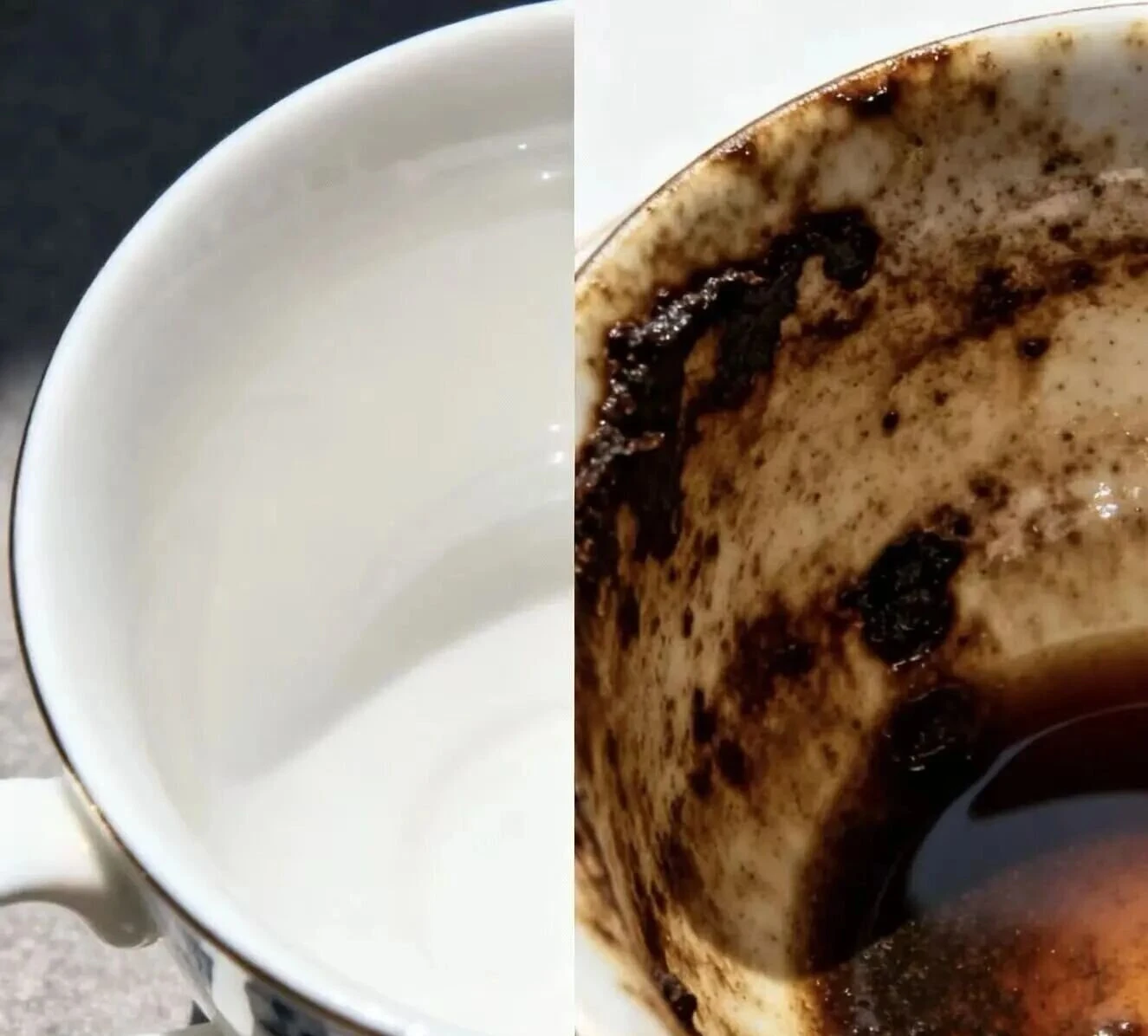
This is far more than a simple cleaning issue. The root cause lies in inherent defects inside the glaze layer. This article dives deep into glaze science at the micro level to explain how stain penetration forms. It also demonstrates how careful frit selection and formulation design can produce premium bone china glazes with excellent stain resistance.
Part 1 The Nature of Stain Penetration: A Glaze Is Not a Solid Glass Barrier, But a Porous Matrix
First, we need to correct a common misunderstanding: no glaze surface is perfectly dense. Under microscopic observation, a glaze consists of glassy phases, crystalline phases and trapped residual bubbles. Stain penetration happens when pigment molecules in tea, mostly oxidised tea polyphenols, enter and become trapped inside the glaze through three main pathways:
Penetration through micro-pores: An underdeveloped glass network leaves countless nano- to micron-sized open pores, which act as channels for pigment infiltration.
Spread along microcracks: Mismatched thermal expansion between the glaze and bone china body creates invisible interconnected microcracks during cooling or daily use, allowing pigments to travel deep into the glaze.
Surface energy adsorption: Excessive breaks in the siloxane network raise surface energy and create a chemically metastable state. Pigment molecules adhere physically and cannot be washed away easily.
High-quality stain-resistant bone china from Chaozhou achieves clean surfaces by tightly controlling glaze recipes and firing processes to minimise these three defects and form a near-perfect vitreous protective layer. The key to hitting all three performance targets is proper frit selection. Let's look further.
Part 2 Three Core Criteria for Stain-Resistant Glazes and the Critical Role of Frits
Building a stain-resistant glaze relies on three key structural properties, which are largely determined by the quality and characteristics of your frit.
| Formula Component | Proportion | Specification Requirements | Main Function |
|---|---|---|---|
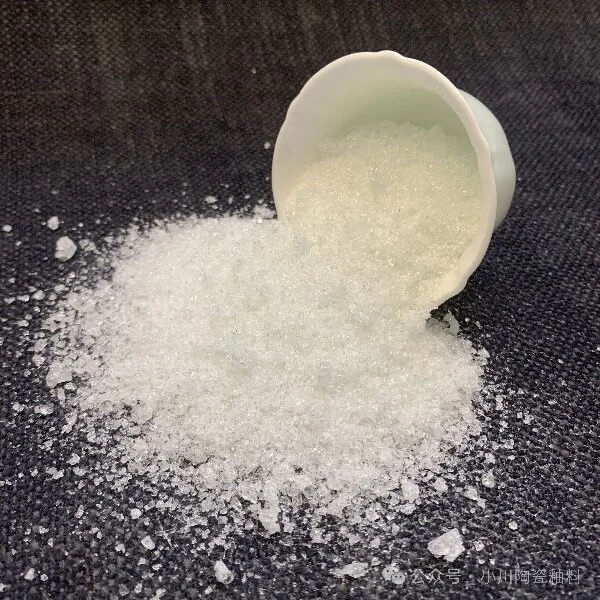
| Base Frit | 70%-80% | High alumina (Al₂O₃ >14%), high calcium, low alkali, fully vitrified; thermal expansion coefficient approx. 6.8–7.2 × 10⁻⁶/°C (matched to bone china body) | Core for stain resistance |
| Calcined Alumina | 5%-8% | D50 < 2 μm, homogeneous dispersion | Densification & reinforcement |
| Kaolin or Ball Clay | 5%-10% | Standard plastic clay is acceptable | Suspension & plasticity adjustment |
| Additives | Appropriate dosage | Conventional grade is acceptable | Levelling & defoaming |
Part 3 Solution: Overcome Staining Through Targeted Frit Selection & Formulation
As outlined above, fixing stain penetration does not rely on heavy additives, but on well-matched raw material combinations.
1. Recommendations for core frit selection
Alumina-rich frits: Choose frits with Al₂O₃ between 12% and 18%. Alumina greatly improves glaze hardness, chemical durability and high-temperature viscosity, forming the structural backbone of a dense glaze.
High-calcium, low-alkali frits: CaO works as an excellent network modifier. It delivers reliable chemical stability without the durability drawbacks of high sodium or potassium levels. Prioritise frits using CaO as the primary flux and be cautious with high-alkali frits.
Specialised low-temperature, high-corrosion-resistant frits: Bone china typically fires at 1180–1230°C. Use fully vitrified frits formulated specifically for this firing range. Avoid frits with mismatched firing windows and incomplete vitrification.
2. Synergistic formulation and firing strategies
Composite reinforcement with frit + calcined alumina: Add 3%–8% finely milled calcined alumina powder to the glaze slip. It does not fully melt; instead, it disperses throughout the glaze matrix, physically blocking potential penetration paths while boosting surface hardness and wear resistance.
Carefully controlled firing schedule: Sufficient high-temperature soaking time allows the frit to flow evenly and gases to escape completely. This final step is critical for producing defect-free glaze.
Part 4 Reference Formulation Framework for Stain-Resistant Bone China Glaze
Below is a conceptual glaze framework designed to resist staining (for reference only; adjustments are required to match your specific body composition).
| Formula Component | Proportion | Specification Requirements | Main Function |
|---|---|---|---|
| Base Frit | 70%–80% | High alumina (Al₂O₃ >14%), high calcium, low alkali, fully vitrified; thermal expansion coefficient approx. 6.8–7.2 × 10⁻⁶/°C (matched to bone china body) | Core for stain resistance |
| Calcined Alumina | 5%–8% | D50 < 2 μm, homogeneous dispersion | Densification & reinforcement |
| Kaolin or Ball Clay | 5%–10% | Standard plastic clay is acceptable | Suspension & plasticity adjustment |
| Additives | Appropriate dosage | Conventional grade is acceptable | Levelling & defoaming |
Firing temperature: 1200–1230°C. Oxidation or mild reduction atmosphere is acceptable, with adequate soaking time.
Expected performance: Glazes developed following this principle show a uniform, dense amorphous glass structure under SEM, with thermal expansion well matched to the bone china body. Key physical benefits include superior smoothness, hardness above Mohs 6, near-zero water absorption and strong acid-alkali resistance. As a result, tea pigments cannot adsorb or penetrate the glaze. Simple rinsing leaves the surface spotless.
Part 5 Diagnose and Upgrade Your Existing Products
If you are struggling with glaze staining, follow this workflow for diagnosis and improvement:
Defect analysis: Cut cross-sections of stained samples and examine the glaze under a microscope to check for pores, cracks or abnormal crystalline phases.
Frit testing: Submit your current frit for chemical analysis (focus on Al₂O₃ and alkali content) and thermal expansion testing.
Formulation review: Work with professional glaze technicians to revise your recipe around your existing body, introducing high-durability frits and alumina reinforcing phases.Lab and line trials: Carry out controlled laboratory tests followed by production-scale trials, with side-by-side stain resistance testing using tea liquor.

Stain-resistant bone china glaze is a win achieved by materials science at the micro level. It is no mysterious craft. It can be systematically engineered and precisely controlled once you understand glaze microstructure and frit behaviour. Choosing the right frit is the most reliable route to high-end quality.We stock matching frits for the solutions covered in this article. Contact us if you require test samples.