




Barium Carbonate GP-42 | Low-Dust Insoluble Barium Source for Frit & Glaze - Zibo Youshang
Product Overview
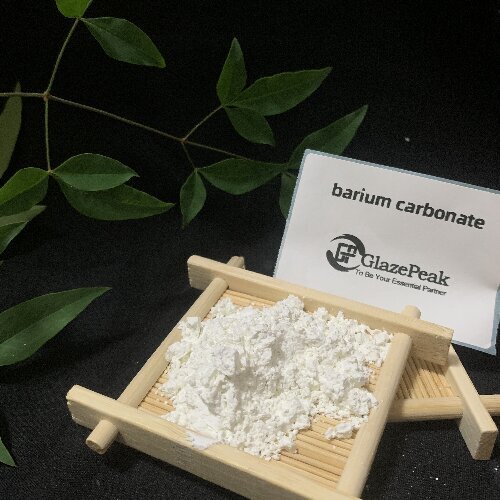
Barium carbonate is an inorganic barium-bearing powder widely adopted within ceramic manufacturing. As an insoluble barium source, it is primarily incorporated in frit melting batches or carefully dosed into glaze formulas. It modifies glass network structure, adjusts thermal expansion behaviour, mitigates surface scumming and enhances glaze brilliancy under proper firing conditions.
Product Description
Manufactured and quality-validated at Zibo Youshang New Material Technology Co., Ltd., rooted in Zibo - China-renowned ceramic capital, GP-42 barium carbonate benefits from our complete operational system covering melting production, in-house laboratory QC, warehousing and logistics, and professional technical support teams. Our two high-temperature kilns produce a broad range of frits, meanwhile our lab performs strict incoming-raw-material inspection, in-process parameter monitoring and certification for finished batches via X-ray fluorescence and wet chemical analysis. Every lot undergoes particle-size, thermal-expansion and chroma testing to guarantee reliable, consistent output for global ceramic manufacturers.
Safety Note: GP-42 barium carbonate is an industrial ceramic raw material. Proper personal protective equipment is required during material handling.

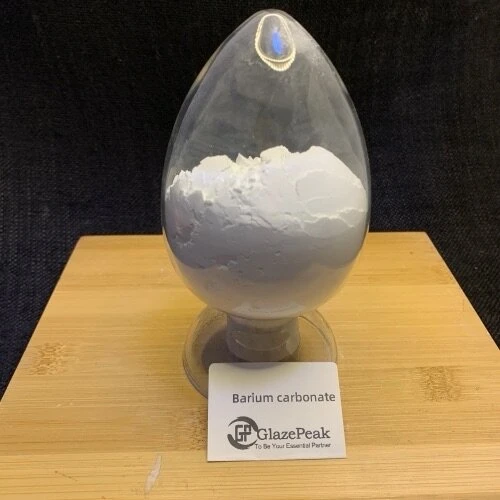
GP-42 is classified as low-dust barium carbonate, processed with optimized milling treatment to reduce airborne fine particles during material handling. As an insoluble barium source, it will not dissolve within aqueous glaze slip, releasing barium ions mainly through high-temperature decomposition inside kilns. Many factories select this grade as a practical barium carbonate substitute when competing alternatives suffer unstable alkalinity or excessive iron contaminants.
When correctly proportioned, GP-42 acts as barium carbonate to prevent scumming by restraining undesired surface efflorescence on fired ceramic pieces. It also functions as barium carb for glaze brilliancy, smoothing glass-matrix construction and lifting surface gloss within reasonable dosage ranges. However, performance heavily depends on application routes. Feeding GP-42 into frit melting kilns delivers far more stable results than direct addition into glaze slip. Direct slip incorporation carries CO₂-releasing risks, which may trigger pinholes and blisters if over-added.
Boasting ≥99.3% total alkalinity and Fe₂O₃ ≤0.04%, GP-42 delivers steady barium input without introducing yellow-grey discoloration for white and light-toned glaze systems. High alkalinity alone cannot guarantee perfect glaze performance. Over-dosage will provoke unexpected devitrification, matte or dry-looking glaze surfaces. It is not a universal solution for all glaze failures, focusing primarily on thermal-expansion tuning, scumming suppression and gloss enhancement. Our technical team provides custom formulation support, collaborating with clients to test recipes matched to individual body composition and firing curves.
GP-42 Barium Carbonate Technical Data
|
Item |
GP-42 Barium Carbonate |
|
BaCO₃ (Total Alkalinity) |
≥99.3% |
|
Fe₂O₃ |
≤0.04% |
|
Moisture |
≤0.20% |
|
Particle size |
325 mesh |
|
Main application |
Ceramic frit raw material, glaze formula adjustment |
|
Available form |
Low-dust powder |
The numbers tell you two useful things. First, total alkalinity ≥99.3% ensures predictable barium supply for frit and glaze development, while low iron content protects light-colored glazes from discoloration. Second, 325-mesh low-dust powder suits ball-milling for frit batches; particle characteristics will influence degassing if you add it directly into glaze slip. Please note high alkalinity cannot offset damage caused by improper over-dosage.
GP-42 is part of Zibo Youshang New Material Technology Co., Ltd.'s raw-material portfolio. We aim to integrate premium ceramic raw materials and deliver stable, profitable frit solutions plus expert-level technical service for ceramic factories worldwide. Reliability, consistency and innovation are pursued across every production procedure. Each shipment is supported by our in-house lab COA report derived from verifiable test data.
Which Grade Fits the Job
|
Your Application |
Recommended Starting Approach for GP-42 Barium Carbonate |
|
Frit batch raw material for melting |
GP-42 low-dust powder, add before high-temperature melting |
|
Adjust thermal expansion & prevent scumming |
GP-42 powder, run low-dosage trial first |
|
Improve glaze brilliancy for light-colored glaze |
GP-42, strictly control addition proportion |
|
Looking for qualified barium carbonate substitute |
GP-42, compare lab COA data side-by-side |
|
Avoid unwanted crystal & matte surface |
Reduce GP-42 addition, execute full firing trial |
Where Barium Carbonate Actually Helps
When wall-tile glaze generates surface scumming
Phenomenon: White efflorescence residues appear on finished glaze surfaces.
Root cause: Migration of soluble salts during drying and firing cycles.
Suggestion: Deploy GP-42 as barium carbonate to prevent scumming; prefer introducing it inside frit melting batches for better effect.
When you pursue enhanced glaze brilliancy for pottery or wall-tile glazes
Phenomenon: Glaze surface appears dull and lacks lustre even after normal firing.
Root cause: Imperfect glass-network formation inside glaze layer.
Suggestion: Treat GP-42 as barium carb for glaze brilliancy optimization. Carry out gradient dosage trials and keep addition within recommended ranges.
Sourcing qualified insoluble barium source for frit manufacturing
Phenomenon: Existing barium feedstock brings heavy dust and unstable batch performance.
Root cause: Poor milling process and inconsistent total alkalinity of incoming raw materials.
Suggestion: GP-42 low-dust barium carbonate works as a competent barium carbonate substitute. Every batch passes strict lab inspection before delivery.
When considering direct addition into glaze slip
Phenomenon: Pinholes and blisters emerge on glazed finished goods.
Root cause: Carbon-dioxide gas released from barium carbonate decomposition under heat.
Suggestion: Minimize direct slip mixing. Prioritize feeding GP-42 during frit melting for complete decomposition and fewer gas-related defects.
What Should You Check Before Choosing Barium Carbonate
Purity and iron impurity matter greatly. Focus on total alkalinity ≥99.3% and Fe₂O₃ ≤0.04%. Iron levels must be tightly controlled for white or pale-hued glaze systems.
Application route creates huge performance gaps. Outcomes differ significantly whether you feed this insoluble barium source into frit melting or blend it directly into glaze slip.
Dosage warning: Excessive barium carbonate triggers unintended crystallization, matte or dry glaze finish. Higher addition will not continuously improve anti-scumming performance or glaze brilliancy.
Prioritize batch-to-batch consistency for procurement. Do not judge merely by product name. Verify stable alkalinity, iron content and low-dust property across successive shipments supported by lab certificates.
Do not chase higher barium content blindly. Balance your dosage according to actual fired results.
FAQ
Q1: Is GP-42 an insoluble barium source? How should I use it properly?
A: Yes, GP-42 acts as an insoluble barium source. We recommend adding it within frit melting batches for full thermal decomposition. Direct glaze-slip addition is permitted only with strict dosage control and pre-firing lab trials.
Q2: Can GP-42 barium carbonate prevent scumming on all ceramic glazes?
A: It greatly helps mitigate scumming under correct formula design, yet scumming can also originate from other raw-material impurities. You need to check your full glaze recipe alongside firing parameters.
Q3: Can this low-dust barium carbonate serve as a barium carbonate substitute for my existing material?
A: It can work as a qualified barium carbonate substitute in most frit and glaze projects. We suggest running small-scale comparative firing trials before mass switching to avoid unexpected shifts in finished-glaze performance.
Q4: Will GP-42 as barium carb for glaze brilliancy keep boosting gloss if I keep raising dosage?
A: No. Over-addition causes crystallization and dull dry surfaces. Gloss improvement only works within a reasonable dosage window, gradient testing is always advised.
Q5: What quality documents and support can Zibo Youshang provide for each GP-42 shipment?
A: Every shipment includes formal lab COA covering total alkalinity, Fe₂O₃, moisture and particle-size data. Our professional technical-support team also provides custom-recipe testing for your unique body and firing curve.
Q6: What is the MOQ, packaging and lead-time for GP-42 low-dust barium carbonate?
A: Please connect with our technical-sales team to get detailed MOQ, low-dust-grade packaging specifications and current production lead-time. Small trial orders are acceptable
CTA
Do not chase higher barium content blindly. Send us your fired glaze sample photo, existing formula and firing curve. Our ceramic engineers will evaluate whether GP-42 low-dust barium carbonate fits your project and offer practical starting-dosage suggestions for your trials.
Hot Tags: barium carbonate, China barium carbonate manufacturers, suppliers, factory


